In this exhibition, the garden operates as an aesthetic and conceptual framework through which personal narratives intersect with broader ideas of beauty, identity, impermanence, and our relationship to the natural world.
Uprise Art is pleased to present Guarded Wilds, an exhibition of new work by Eddie Perrote, Kate Clements, Lucía Rodríguez Pérez, Natalía Nicole Rodríguez, and Padma Rajendran.
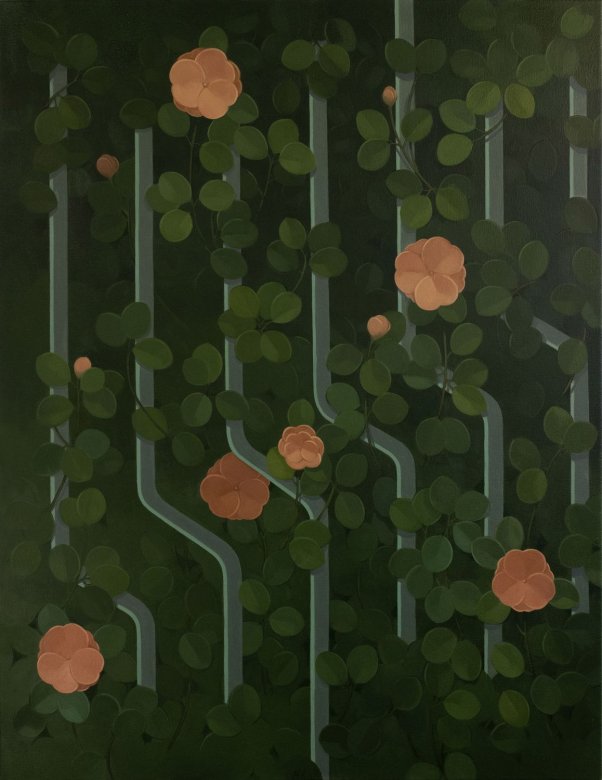
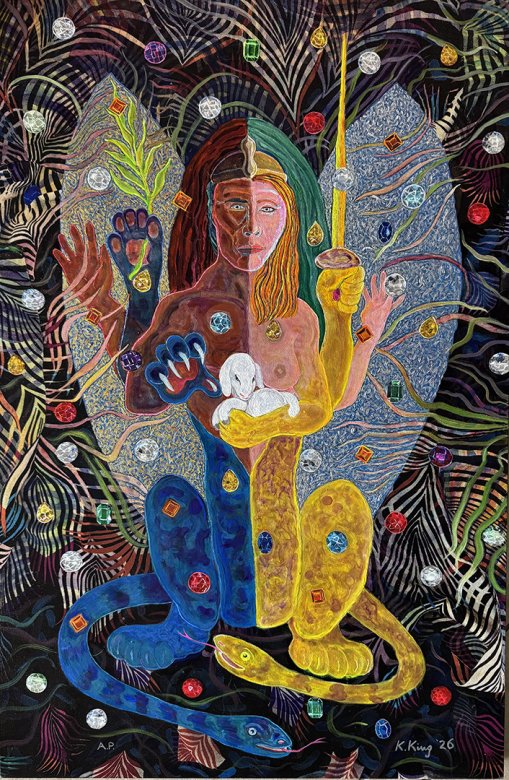
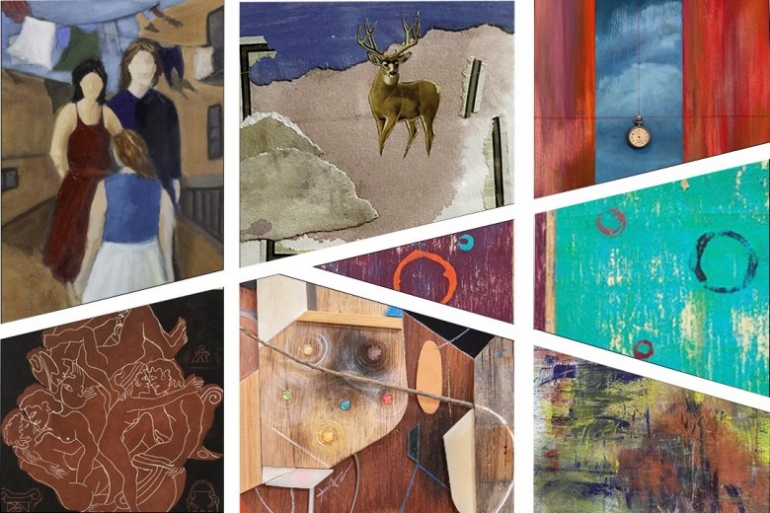
Through oil painting, glass, drawing, acrylic, and hand-dyed silk, each artist considers the garden as both subject and metaphor. In this exhibition, the garden operates as an aesthetic and conceptual framework through which personal narratives intersect with broader ideas of beauty, identity, impermanence, and our relationship to the natural world.
Eddie’s paintings exist in pure abstraction. They are a rejection of all things representational, in favor of abstract expression and raw composition used to capture the identity and essence of place and time. He uses fields of color and alternatingly geometric and expressive shapes to explore memory and connection to place, casting aside discernible imagery to achieve a more sensory expression of the spirit of the moment. This way of working has largely been born out of Eddie’s illustration and design practice. In opposition to creating within the confines of a tightly defined brief, his turn to abstraction has functioned as a garden for unexplored ideas, an opportunity to create with abandon and looseness that emotes rather than illustrates.
Created with frit, a type of crushed glass that is manipulated on a kiln shelf and fused together at a high temperature, Kate's opulent sculptures reference Victorian-era decor as a means to explore our culture’s obsession with beauty and the role nature has played in ornamentation. As the natural world undergoes endless cycles of transformation and resists permanence, so too do popular ideals of beauty, which are continually shattered and reformed according to the whims of society. Her works reference 19th-century cabbage rose wallpaper, whose coveted brilliant greens and yellows were notoriously achieved with arsenic. By invoking these historical motifs through the seductively confectionary quality of glass, Kate reveals the literal and metaphorical toxins concealed beneath surface beauty, asking what it costs to sustain ideals of perfection and the desire to keep up appearances.
☆Donation:
support@artlecture.com